


Introduction
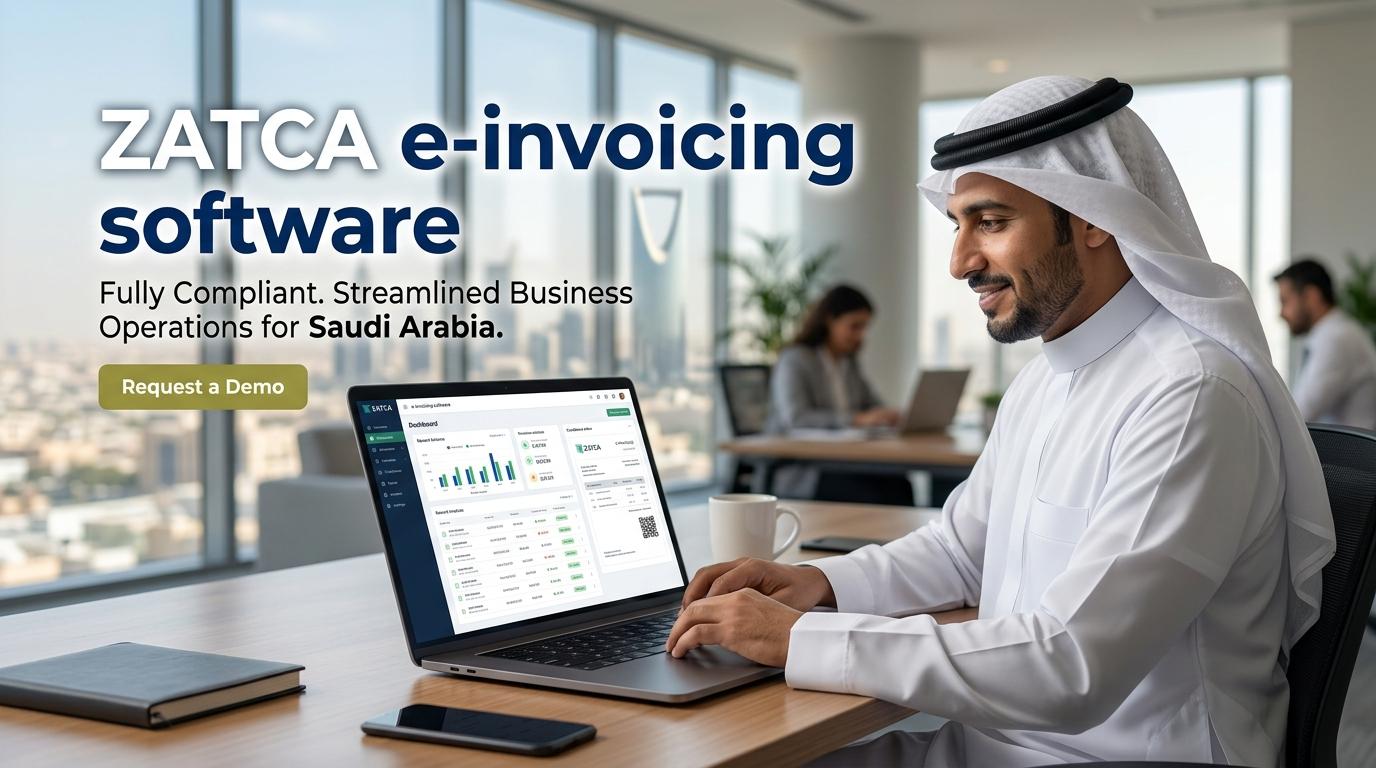
Saudi Arabia has introduced a mandatory digital invoicing system to improve transparency, reduce tax fraud, and standardize business transactions across the country. This system is regulated by the Zakat, Tax and Customs Authority and is known as ZATCA e-invoicing software. It plays a critical role in helping businesses generate, store, and transmit invoices in a structured electronic format that meets government requirements.
The adoption of ZATCA e-invoicing software is not optional for VAT registered businesses. It is a legal requirement that ensures every invoice is created in a compliant digital format and shared securely through approved systems.
Understanding ZATCA e-invoicing system in Saudi Arabia
The e-invoicing system in Saudi Arabia replaces traditional paper invoices with electronic versions that are generated and processed digitally. It ensures that every transaction is traceable and securely stored.
The system operates through structured electronic invoices that include key business and tax data such as VAT numbers, timestamps, and invoice identifiers.
ZATCA e-invoicing software acts as the bridge between businesses and the national tax platform, ensuring that invoices meet all technical and regulatory requirements.
Phases of ZATCA e-invoicing compliance
The compliance framework is implemented in two main phases, each with specific requirements for businesses.
Phase 1 Generation phase
In this stage, businesses are required to generate electronic invoices using compliant systems instead of paper based methods.
Key requirements include
- Electronic invoice generation
- Secure storage of invoices
- Inclusion of required tax fields
- Proper invoice numbering system
This phase focuses on digital transformation of invoice creation.
Phase 2 Integration phase
This phase introduces real time integration with ZATCA systems.
Key features include
- Real time invoice validation
- Secure API integration with ZATCA platform
- Cryptographic stamping of invoices
- Structured XML format submission
This phase ensures full compliance with national tax systems and enhances transparency.
Role of ZATCA e-invoicing software in compliance
ZATCA e-invoicing software is designed to ensure that businesses meet both technical and legal requirements without manual effort.
It helps companies by
- Generating compliant invoice formats automatically
- Ensuring correct VAT calculations
- Preventing invoice duplication or tampering
- Maintaining secure invoice records
- Supporting audit ready documentation
This reduces compliance risk and operational errors.
Key features of ZATCA compliant software
To ensure full compliance, businesses must choose software that supports essential features.
Structured invoice format support
The software must generate invoices in approved formats such as XML or hybrid formats that include machine readable data.
Real time validation and reporting
Integration with ZATCA systems ensures that invoices are validated instantly before being shared with customers.
Secure data handling
Encryption and authentication features protect sensitive financial information during transmission.
Audit and reporting tools
The system should allow easy access to historical invoices for audits and inspections.
Benefits of using ZATCA e-invoicing software
Businesses that adopt compliant systems gain multiple advantages beyond legal compliance.
Improved accuracy in invoicing
Automated calculations reduce human errors in VAT and billing processes.
Faster transaction processing
Digital invoices are processed quickly, improving cash flow and operational efficiency.
Better compliance management
Businesses can easily meet government regulations without manual tracking.
Reduced operational risks
Secure systems reduce fraud, duplication, and data loss risks.
Challenges without compliant e-invoicing software
Companies that do not use proper ZATCA e-invoicing software may face
- Penalties for non compliance
- Invoice rejection by the tax system
- Data inconsistency issues
- Operational delays in billing
- Audit complications
These challenges can significantly impact business operations.
Industry adoption across Saudi Arabia
Different industries in Saudi Arabia are adopting ZATCA compliant systems including
- Retail businesses managing high transaction volumes
- Ecommerce platforms handling online orders
- Service providers issuing digital invoices
- Manufacturing companies tracking supply chain billing
- Hospitality sector managing customer billing systems
Each industry benefits from standardized invoicing processes.
Importance of integration with business systems
Modern ZATCA e-invoicing software should integrate with existing systems such as
- ERP platforms
- Accounting software
- POS systems
- CRM tools
This ensures smooth data flow and eliminates manual duplication.
Security and regulatory reliability
Security is a key requirement in Saudi Arabia’s e-invoicing framework.
Compliant software ensures
- Encrypted invoice transmission
- Secure API communication
- Controlled access to financial data
- Reliable storage of transaction history
This builds trust between businesses and regulators.
Future of digital invoicing in Saudi Arabia
Saudi Arabia continues to expand its digital tax infrastructure. The ZATCA system is expected to evolve further with more automation, stricter validation rules, and deeper integration with business platforms.
ZATCA e-invoicing software will remain a core requirement for businesses as the country moves toward a fully digital economy.
Final thoughts on ZATCA e-invoicing software
The introduction of mandatory e-invoicing in Saudi Arabia has transformed how businesses handle financial transactions. Using compliant ZATCA e-invoicing software is essential for meeting legal requirements, ensuring accuracy, and maintaining smooth business operations.
Companies that adopt the right system not only stay compliant but also improve efficiency, reduce risks, and prepare for future digital tax advancements.

 English
 French
 Spanish
 Portuguese
 Deutsch
 Turkish
 Dutch
Dutch
 Italiano
 Russian
 Romaian
 Portuguese (Brazil)
 Tiếng Việt