


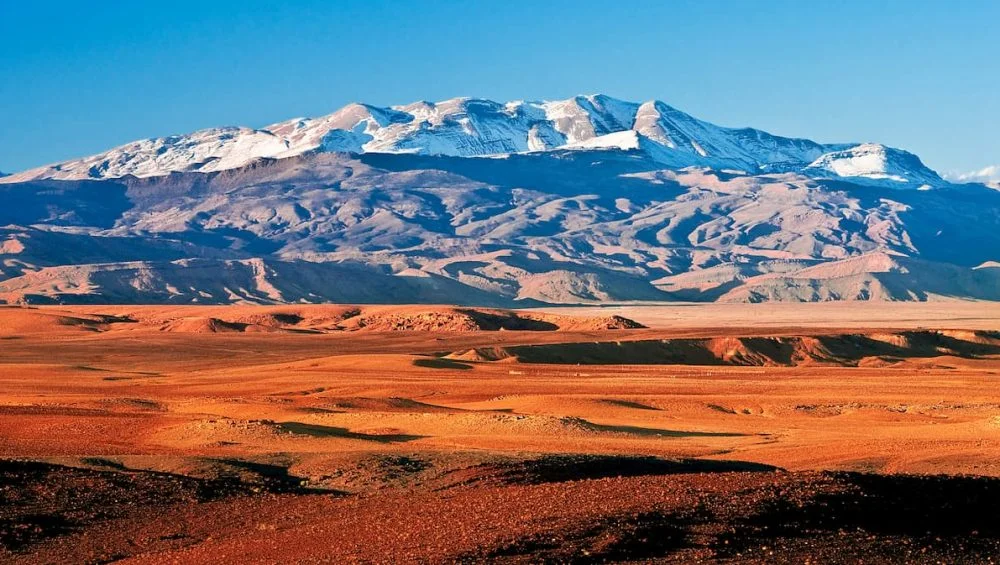
The mountain spine of North Africa is dominated by the vast Atlas range, a dramatic system stretching across Morocco and shaping its climate, culture, and geography. Understanding the map of Atlas Mountains is essential for grasping how this region influences everything from weather patterns to human settlement. The range is not a single continuous wall but a collection of interconnected mountain chains, valleys, and high plateaus.
Overview of the Atlas Mountain System
The Atlas Mountains form a natural barrier between the Mediterranean and Atlantic coastal regions and the Sahara Desert. Within the map of Morocco Atlas Mountains, the range is typically divided into three major sections: the High Atlas, Middle Atlas, and Anti-Atlas.
· The High Atlas contains the highest peaks in North Africa
· The Middle Atlas is known for forests and lakes
· The Anti-Atlas stretches toward the Sahara with rugged, arid terrain
Together, these regions create a complex geological structure that defines much of central and southern Morocco.
The High Atlas: Roof of North Africa
The High Atlas is the most prominent feature on the map of Morocco's Atlas Mountains, running diagonally across the country from the Atlantic coast toward the Algerian border. This region is home to the highest peak in North Africa, Mount Toubkal.
· Key Characteristics
· Snow-capped peaks in winter
· Deep, narrow valleys carved by rivers
· Traditional Berber villages built on steep slopes
The High Atlas acts as a climatic divide, blocking humid Atlantic air from reaching the Sahara. This creates lush northern slopes and dry southern faces.
One of the most important landmarks here is the Atlas Mountains themselves, especially its central High Atlas section, which dominates the map of Morocco Atlas Mountains visually and geographically.
The Middle Atlas: Forested Highlands
Moving northward on the map of Morocco Atlas Mountains, the Middle Atlas presents a completely different landscape. Unlike the rocky High Atlas, this region is covered in cedar forests, rolling hills, and volcanic plateaus.
· Features of the Middle Atlas
· Dense cedar and oak forests
· Cooler and wetter climate
· Lakes formed by ancient volcanic activity
This region plays a vital ecological role by supplying water to major rivers. It also supports wildlife such as Barbary macaques, which are rare in North Africa.
The Middle Atlas is often considered the green heart of the Atlas system, offering a softer contrast to the harsh southern mountains.
The Anti-Atlas: Ancient and Arid Landscapes
The Anti-Atlas forms the southernmost part of the map of Morocco Atlas Mountains. Geologically older than the High Atlas, it is heavily eroded and characterized by rocky ridges and desert-edge conditions.
· Landscape Traits
· Dry, rugged terrain
· Exposed rock formations
· Sparse vegetation
This region gradually transitions into the Sahara Desert, making it a key ecological boundary. The Anti-Atlas is also rich in mineral deposits and traditional Amazigh culture.
Valleys and River Systems
Valleys are one of the most important features visible on any map of Morocco Atlas Mountains. These valleys have been carved over millions of years by rivers flowing from snowmelt and rainfall in the High Atlas.
· Major Valley Types
· River valleys: Support agriculture and settlements
· Gorges: Deep, narrow canyons like Todra Gorge
· Oasis valleys: Found near desert edges
These valleys allow life to thrive in otherwise harsh environments. Many towns and agricultural zones depend entirely on mountain water sources originating in the Atlas system.
Major Peaks and Elevation Zones
The Atlas Mountains contain a range of elevations that influence climate and biodiversity. The most significant peaks are located in the High Atlas.
· Notable Peaks
· Mount Toubkal (highest in North Africa)
· M’Goun Massif
· Ouanoukrim peaks
Elevation zones create distinct ecological layers:
· Low valleys: agriculture and villages
· Mid-elevations: forests and grazing land
· High peaks: rocky, snow-covered terrain
These variations make the map of Morocco Atlas Mountains highly diverse compared to most other mountain systems in Africa.
Regional Divisions and Cultural Influence
Each section of the Atlas Mountains has influenced human life differently. On the Atlas Mountains, these divisions are not only physical but also cultural.
· Cultural Highlights
· Berber (Amazigh) communities dominate rural mountain areas
· Terraced farming is common in steep valleys
· Traditional architecture adapts to climate and terrain
The mountains have historically acted as both a barrier and a refuge, allowing unique cultural traditions to develop in relative isolation.
Climate Influence and Natural Boundaries
One of the most important roles of the Atlas system is its impact on the climate. The Atlas Mountains clearly shows how the range divides different environmental zones.
· Northern slopes: wetter, Mediterranean climate
· Southern slopes: dry, desert-like conditions
· High elevations: alpine weather with snow
This creates a sharp environmental contrast within relatively short distances, making the region one of the most geographically dynamic in North Africa.
Conclusion
The Atlas Mountains are more than just a physical feature—they are the backbone of North Africa’s geography. From snow-covered peaks to arid desert edges, the map of Morocco Atlas Mountains reveals a world of contrasts shaped by elevation, climate, and geological history.
Understanding this system helps explain not only Morocco’s natural landscape but also its cultural and ecological diversity. Whether studying peaks, valleys, or regional divisions, the Atlas Mountains remain one of the most fascinating mountain systems in the world.

 English
 French
 Spanish
 Portuguese
 Deutsch
 Turkish
 Dutch
Dutch
 Italiano
 Russian
 Romaian
 Portuguese (Brazil)
 Tiếng Việt