


Introduction
Diploma Certificate Apostille is increasingly required for international employment, technical migration programs, vocational licensing, and overseas education pathways.
Unlike traditional university degree legalization, diploma authentication often involves technical institutes, vocational boards, polytechnic institutions, and specialized educational authorities.
This creates a different verification structure compared to standard academic document processing.
Many applicants assume diploma certificates follow the same authentication system as university degrees. In practice, vocational and technical educational records frequently require separate institutional verification methods before apostille approval can proceed.
The complexity usually comes from how the issuing institution maintains academic records and how international authorities evaluate technical qualifications.
This article explains how Diploma Certificate Apostille in India works and why technical educational verification plays a major role in international acceptance.
What Diploma Certificate Apostille Actually Confirms
A diploma certificate confirms completion of a technical, vocational, or specialized educational program issued by a recognized institution.
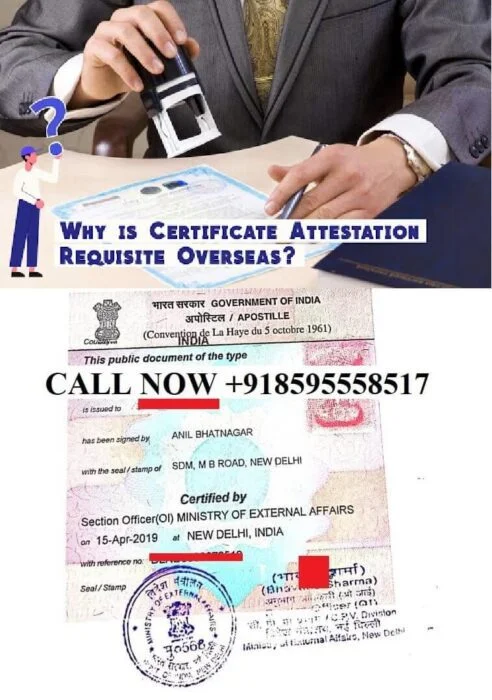
Apostille authenticates the legitimacy of the issuing authority so the document can be legally accepted abroad.
The apostille process does not evaluate technical skills or course quality independently.
Its purpose is to validate that the diploma certificate was officially issued and properly authenticated for international use.
Why Diploma Verification Is Different From Degree Verification
Diploma documents are issued by a wide range of institutions.
These may include polytechnic institutes, vocational boards, technical education councils, skill development authorities, and specialized training institutions.
Verification systems vary significantly between these institutions.
Some maintain centralized digital academic records, while others rely heavily on manual verification systems.
This difference directly affects authentication timelines.
How the Apostille Process Works
The process begins with educational verification through the issuing institution or technical education authority.
After successful educational authentication, the document proceeds for official verification before reaching the Ministry of External Affairs for apostille certification.
If the destination country is outside the Hague Convention, Embassy Attestation becomes necessary after authentication.
Every legalization stage depends on successful institutional verification.
Why Technical Documentation Requires Extra Attention
Diploma certificates are frequently used for highly regulated professional categories abroad.
Technical migration programs, skilled worker applications, and vocational licensing systems often examine educational authenticity carefully.
Course specialization, institutional recognition, and technical training legitimacy may influence document review procedures during international evaluation.
Common Reasons Diploma Apostille Is Required
Diploma apostille is commonly required for overseas technical employment and vocational licensing.
It is also used for skilled migration programs, foreign educational admissions, international apprenticeship applications, and specialized professional training abroad.
Several countries request legalized technical qualifications before approving work permits in regulated sectors.
What Usually Causes Delays
Institutional verification delays are one of the biggest reasons.
Older diploma records may not exist in digital systems.
Applicants sometimes submit incomplete academic documentation without marksheets or supporting institutional records.
Name inconsistencies between passport details and educational documents may also increase authentication timelines.
Why Polytechnic and Vocational Records Can Be Complicated
Technical institutions sometimes operate under changing administrative structures.
Older diploma records may belong to institutions that were renamed, merged, or reorganized.
This can create additional verification requirements before educational authentication is completed.
Applicants using older vocational certificates may experience longer processing timelines because archive-level confirmation becomes necessary.
Timeline Based on Actual Verification Flow
If institutional records are digitally accessible and documentation is complete, legalization usually moves efficiently.
If manual archive verification becomes necessary, timelines increase considerably.
Destination-country requirements may also affect overall authentication duration depending on professional licensing rules abroad.
Cost Factors Explained
Cost depends on urgency, institutional verification complexity, destination-country legalization requirements, and supporting documentation needs.
Standard timelines follow regular pricing structures.
Priority processing and additional verification procedures increase overall cost.
Practical Approach That Works
Ensure diploma certificates, marksheets, and supporting educational records are complete before submission.
Check that passport information matches academic documents accurately.
If the diploma certificate is old or damaged, obtaining a fresh institutional copy may help reduce authentication delays.
Applicants should also confirm whether apostille or Embassy Attestation is required based on destination-country legalization rules.
Real Scenario Insight
An applicant submitted a polytechnic diploma certificate for skilled migration processing abroad.
The institution had changed administrative structure several years earlier, and older academic records required manual archive confirmation before authentication could proceed.
The delay was caused by institutional verification restructuring rather than apostille processing itself.
About INFINITYGRO
INFINITYGRO
C – 5 A/2 New Ashok Nagar, Delhi – 110096
Phone: +91 8595558517
FAQs
Why do diploma apostille applications sometimes take longer
Technical institutions may require additional educational verification and archive confirmation.
Can old diploma certificates still be apostilled
Yes, but manual institutional verification may be necessary.
Does apostille verify technical skills directly
No, it authenticates the issuing authority and document legitimacy.
What is the difference between apostille and Embassy Attestation
Some countries require embassy legalization instead of apostille certification.
Can identity mismatches affect diploma authentication
Yes, inconsistent personal details often trigger additional verification.
Conclusion
Diploma Certificate Apostille in India depends heavily on institutional verification systems, technical education record accessibility, and identity consistency.
If educational documentation is complete and records are accessible, legalization generally moves smoothly.
If archive verification or institutional restructuring issues appear, timelines increase significantly.
Understanding how technical educational authentication works helps applicants prepare correctly and avoid unnecessary delays during international vocational and professional documentation procedures.

 English
 Arabic
 French
 Spanish
 Portuguese
 Turkish
 Dutch
Dutch
 Italiano
 Russian
 Romaian
 Portuguese (Brazil)
 Tiếng Việt