


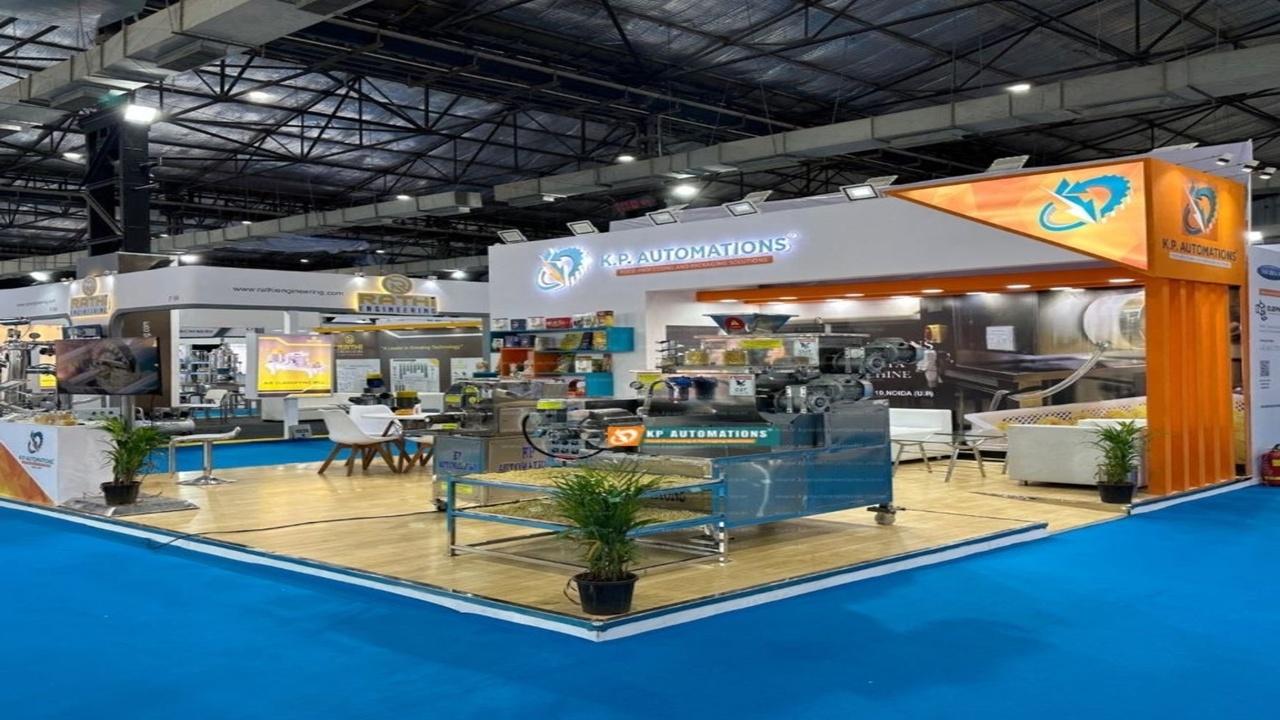
The global demand for processed food products has changed the operational structure of modern food manufacturing plants. Among various processed food categories, pasta manufacturing has emerged as one of the fastest-growing industrial segments due to increasing consumer demand for shelf-stable, easy-to-cook, and scalable food products. This growth has significantly increased the importance of advanced pasta machines capable of maintaining production consistency, operational efficiency, and long-term manufacturing stability.
Industrial pasta production is no longer dependent on small semi-manual systems. Modern factories require integrated processing environments where extrusion, drying, cooling, and packaging operate in synchronization. As production capacity increases, manufacturers face challenges related to moisture control, product consistency, energy utilization, labor dependency, and production downtime. Because of this, the selection of the right pasta machine directly influences production economics and plant performance.
Manufacturers setting up large-scale food processing operations are now focusing on automation, process reliability, and continuous production capability rather than only evaluating output speed. Industrial food plants require systems that can maintain stable product quality across long operational cycles without excessive operator intervention.
KP Automations, located at G.B D-372, D Block, Sector 10, Noida, Uttar Pradesh 201301, India, works within this industrial manufacturing segment where food processors increasingly demand integrated pasta production systems designed for commercial-scale operations.
Understanding Industrial Pasta Machine Operations in Modern Factories
Modern pasta manufacturing involves a controlled sequence of mechanical and thermal processes that transform raw ingredients into shelf-stable finished products. A commercial pasta machine operates as part of a larger production environment where consistency and process synchronization are critical.
The production cycle generally begins with raw material preparation. Wheat flour or semolina is mixed with water under controlled conditions to achieve a uniform dough structure. Mixing consistency is extremely important because variations in dough hydration directly affect extrusion stability and drying performance later in the process.
After mixing, the dough enters the pasta extrusion machine where pressure and shaping mechanisms determine the final product geometry. Extrusion systems are designed to maintain uniform density and shape accuracy while minimizing air pockets inside the product. Industrial extrusion systems operate continuously and require precise pressure balancing to prevent structural inconsistencies.
The shaping section of a pasta machine can produce multiple product formats depending on die configuration. Long-cut pasta, short-cut pasta, tubular pasta, and specialty shapes require different extrusion parameters and downstream handling methods. This flexibility allows manufacturers to diversify production without redesigning the entire processing system.
Once extrusion is completed, products enter the pasta drying system. Drying is one of the most technically sensitive stages in industrial pasta manufacturing because improper moisture removal can lead to cracking, brittleness, microbial instability, or product deformation.
A modern industrial pasta dryer uses controlled airflow, humidity management, and temperature balancing to reduce moisture gradually while maintaining product integrity. Drying curves must be carefully optimized depending on pasta geometry, thickness, and production speed.
After drying and cooling, the product moves into the pasta packing machine where automated weighing, filling, and sealing operations prepare the final packaged product for storage and distribution.
Industrial Pasta Machine Configurations and Their Practical Applications
Different production environments require different pasta machine configurations depending on production scale, operational objectives, and product diversity.
Smaller production facilities often begin with semi-automatic pasta making machine systems designed for moderate output and limited product variation. These systems provide operational flexibility while maintaining manageable capital investment levels.
Large-scale food manufacturing plants generally prefer fully integrated industrial pasta making machine systems capable of continuous operation with minimal manual intervention. These systems include synchronized extrusion, drying, cooling, and packaging modules connected through automated handling systems.
An automatic pasta making machine is particularly valuable in high-volume production environments where production consistency and labor efficiency are operational priorities. Automation improves process stability by reducing operator dependency and maintaining repeatable production parameters throughout long manufacturing cycles.
Manufacturers serving export markets or organized retail sectors often prioritize fully automated production systems because product consistency and packaging precision directly influence market acceptance and distribution performance.
Industrial systems are also designed differently depending on product specialization. Facilities focused on long-cut pasta require specialized hanging and drying systems, while short-cut pasta production lines focus more heavily on vibration handling, cooling uniformity, and high-speed packaging integration.
Integration of Pasta Machines Within Complete Production Lines
Modern food manufacturing increasingly depends on synchronized production ecosystems rather than isolated machinery. Because of this, the role of the pasta production line has become significantly more important than individual machine performance alone.
A production line approach ensures operational continuity between mixing, extrusion, drying, cooling, and packaging stages. In disconnected systems, production imbalance often creates bottlenecks that reduce efficiency and increase downtime.
For example, extrusion speed must remain aligned with drying capacity. If extrusion output exceeds drying throughput, product accumulation can create handling instability and quality variation. Similarly, packaging speed must synchronize with cooling and storage operations to avoid dispatch delays.
Integrated pasta production line systems reduce these operational mismatches through coordinated automation controls and synchronized production planning.
Another major advantage of integrated production systems is improved process visibility. Plant operators can monitor output consistency, moisture control, energy consumption, and packaging performance across the entire manufacturing cycle rather than managing each stage independently.
This level of process coordination becomes increasingly important as production volumes scale upward.
Operational Advantages of Automation in Pasta Manufacturing
Automation has become one of the defining trends in modern food manufacturing because industrial plants increasingly prioritize operational stability and production efficiency.
A modern automatic pasta making machine reduces dependence on constant manual adjustment by maintaining controlled production parameters throughout the manufacturing process.
In conventional systems, operators frequently intervene to correct extrusion pressure, drying imbalance, or packaging inconsistency. These adjustments increase labor dependency and create variability between production shifts.
Automated systems minimize these inconsistencies by stabilizing operational conditions through sensor-based monitoring and controlled process management.
Another major advantage of automation is production repeatability. Industrial food processors require identical product characteristics across multiple production cycles. Automation helps maintain consistent shape accuracy, moisture content, density, and packaging precision throughout extended operating periods.
Energy optimization is also becoming increasingly important in industrial food plants. Modern industrial pasta dryer systems often include airflow management technologies and controlled thermal balancing that improve drying efficiency while reducing unnecessary energy consumption.
Labor efficiency is another operational factor driving automation adoption. Many food manufacturing businesses face increasing difficulty in maintaining highly skilled operational labor across continuous production schedules. Automated systems simplify production supervision and reduce the operational risks associated with workforce variability.
Technical Considerations When Selecting a Pasta Machine
Selecting the right pasta machine requires more than evaluating hourly production capacity. Industrial buyers increasingly evaluate machinery based on long-term operational reliability, maintenance stability, scalability, and integration compatibility.
Production flexibility is one of the first technical considerations. Manufacturers planning to produce multiple pasta formats should prioritize systems capable of rapid die changes and adjustable production configurations.
Drying capability must also align with intended production volumes. An undersized pasta drying system may create moisture imbalance and production delays during higher-capacity runs.
Packaging integration is equally important because downstream inefficiencies can reduce the productivity of the entire manufacturing line. A properly synchronized pasta packing machine helps maintain stable dispatch flow and minimizes secondary handling requirements.
Maintenance accessibility is another critical operational factor. Industrial food plants operating continuous production schedules require systems designed for cleaning efficiency, component accessibility, and preventive maintenance management.
Manufacturers also increasingly evaluate scalability during equipment selection. A pasta machine capable of future production expansion provides better long-term operational flexibility than systems limited to fixed production configurations.
Businesses researching pasta making machine price often focus initially on capital expenditure. However, industrial buyers generally place greater emphasis on lifecycle operational efficiency, maintenance cost stability, energy utilization, and production consistency rather than purchase cost alone.
For technical discussions regarding industrial food processing systems, KP Automations can be reached at +91 9310738142 or kpautomations372@gmail.com.
Emerging Technologies Influencing the Future of Pasta Manufacturing
Industrial pasta manufacturing is continuing to evolve through increasing automation, digital monitoring integration, and process optimization technologies.
Modern production systems increasingly incorporate sensor-based process management to improve moisture consistency, extrusion stability, and production tracking accuracy.
Manufacturers are also investing in modular production systems capable of supporting rapid product diversification without requiring complete plant redesign.
Energy efficiency remains a major focus area as industrial plants attempt to reduce operational costs while maintaining high production throughput. Advanced industrial pasta dryer technologies are increasingly designed around airflow optimization and thermal efficiency balancing.
Data-driven manufacturing is also influencing the future direction of pasta machines. Real-time monitoring systems allow operators to track performance metrics across multiple production stages, improving preventive maintenance planning and operational forecasting.
As global food manufacturing demand continues increasing, industrial processors are prioritizing systems capable of maintaining stable quality standards under continuous high-volume production conditions.
Conclusion
The role of pasta machines in modern food manufacturing extends far beyond simple product formation. Industrial pasta production now depends on synchronized processing systems where extrusion, drying, cooling, and packaging operate as integrated components within larger manufacturing ecosystems.
Modern manufacturers require machinery capable of supporting production consistency, operational efficiency, scalability, and process reliability under demanding industrial conditions.
From extrusion precision and drying stability to packaging synchronization and automation integration, every stage of the manufacturing cycle directly influences product quality and operational performance.
As industrial food processing continues evolving, businesses investing in technically stable and operationally efficient pasta machine systems will remain better positioned to manage increasing production demands, changing market expectations, and long-term manufacturing scalability.

 Arabic
 French
 Spanish
 Portuguese
 Deutsch
 Turkish
 Dutch
Dutch
 Italiano
 Russian
 Romaian
 Portuguese (Brazil)
 Tiếng Việt