


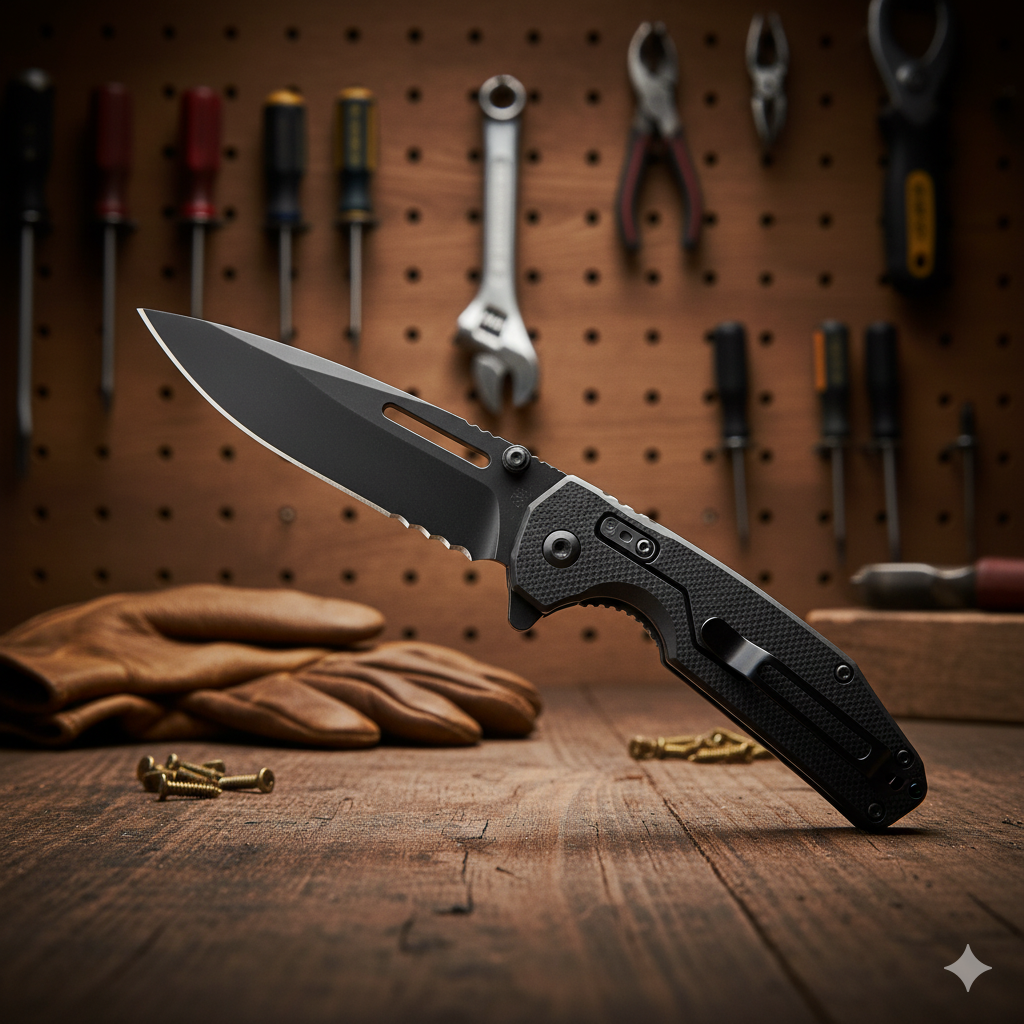
In an increasingly unpredictable world, personal safety has shifted from a luxury to a necessity. Whether you are walking to your car after a late shift, hiking on a remote trail, or simply want peace of mind in your daily commute, the tools you carry can make a life-saving difference. Two of the most popular choices for EDC (Everyday Carry) enthusiasts and safety-conscious individuals are the pocket knife and the taser gun.
However, choosing between these two is not just about which looks more intimidating. It involves understanding the mechanics of self-defense, the legal landscape of your region, and your own psychological readiness to use force. This comprehensive guide explores the nuances of both tools to help you decide which belongs in your pocket.
The Pocket Knife: More Than Just a Cutting Tool
A pocket knife is perhaps the most versatile tool a person can carry. From opening packages to emergency utility work, its primary function is usually utilitarian. However, in a defensive scenario, a well-made pocket knife serves as a "last-ditch" defensive option.
Pros of Carrying a Pocket Knife
-
Utility First: Unlike a dedicated weapon, a knife is used daily for non-violent tasks. This means you are more likely to have it on you when you actually need it.
-
No Batteries Required: A mechanical folding knife is always "on." There are no circuits to fail, no batteries to drain, and no cartridges to misfire.
-
Compact and Discreet: Modern "deep-carry" clips allow a knife to sit low in the pocket, making it virtually invisible to the casual observer.
-
Legal Accessibility: In many jurisdictions, carrying a small folding knife is legal for utility purposes, whereas dedicated self-defense weapons may be restricted.
The Realities of Defensive Use
It is vital to understand that using a knife for defense is a "contact" activity. To use a knife, an attacker must already be within your personal space. This increases the risk of the weapon being turned against you if you lack proper training. Experts often suggest that a knife should be viewed as a tool to create space so you can escape, rather than a tool for prolonged engagement.
The Taser and Stun Gun: The Power of Deterrence
When people think of non-lethal protection, the image of a high-voltage arc usually comes to mind. While the terms are often used interchangeably, there is a technical difference: a stun gun requires direct physical contact, whereas a taser gun typically refers to a device that can fire projectiles to incapacitate an attacker from a distance.
Pros of Electronic Defense Devices
-
Range (Taser Guns): The primary advantage of a projectile-based taser is the ability to stop a threat before they reach you. Creating distance is the #1 rule of self-defense.
-
Neuromuscular Incapacitation: High-quality electronic devices don’t just cause pain; they override the nervous system, causing temporary "locked" muscles. This gives you a crucial window to run for help.
-
Psychological Deterrence: The loud, crackling sound of an electric arc is a powerful deterrent. Many attackers will flee simply upon hearing the device being test-fired.
-
Less-Lethal Nature: For those who are uncomfortable with the idea of using lethal force, electronic devices offer a way to stop an attacker without causing permanent injury or death.
Maintenance and Limitations
The biggest drawback to electronic devices is their reliance on technology. You must ensure the battery is charged and, in the case of projectile tasers, you often have only one shot. If you miss, the device effectively becomes a close-contact stun gun, requiring you to be in the "danger zone."
Comparing the Two: Which is Right for You?
To make an informed decision, consider the following comparison table:
| Feature | Pocket Knife | Taser / Stun Gun |
| Effective Range | Close Contact (Arms length) | Contact to 15+ feet (Model dependent) |
| Primary Function | Utility / Multi-tool | Dedicated Self-Defense |
| Ease of Use | Requires significant training | Point-and-shoot / Simple contact |
| Reliability | Extremely High (Mechanical) | Moderate (Electronic/Battery) |
| Legal Status | Generally legal (with blade limits) | Varies widely by region |
| Lethality | Potential for lethal force | Designed as Less-Lethal |
Legal Considerations and the "Grey Man" Concept
Before purchasing either tool, you must research your local laws. For instance, in South Africa, the Dangerous Weapons Act governs what you can carry. Generally, carrying a tool for a "lawful purpose" (like a pocket knife for work) is permissible, but carrying an object with the intent to cause harm can lead to legal scrutiny.
+1
The "Grey Man" concept suggests that your defensive tools should not draw attention. A bright, tactical-looking taser might make you a target or cause alarm in a public space. A discreet pocket knife or a taser disguised as a flashlight allows you to move through the world without broadcasting that you are armed.
Training: The Missing Link
The most sophisticated taser or the sharpest knife is useless if you cannot deploy it under stress. In a high-adrenaline situation, "fine motor skills" (like unfolding a small knife or aiming at a moving target) often vanish.
-
Muscle Memory: Practice drawing your tool from your pocket or holster until the motion is fluid.
-
Situational Awareness: The best defense is not being there. Use your tools only when your "Scan, Avoid, De-escalate" strategy fails.
-
The "Run" Strategy: Both tools serve one ultimate purpose: to give you enough time to get away. Never stay to "finish the fight."
Conclusion: The Layered Approach to Safety
There is no "perfect" weapon. The best personal safety strategy is layered. Many experts recommend carrying a pocket knife for daily utility and a non-lethal electronic device for dedicated protection. This gives you options: if a threat is at a distance, the taser provides a deterrent; if you are grabbed or the electronics fail, the knife serves as a reliable mechanical backup.
Regardless of what you choose, remember that the most powerful tool you own is your brain. Stay alert, stay informed, and carry the tools that make you feel empowered to navigate your world safely.
Frequently Asked Questions (FAQ)
1. Is a pocket knife better than a stun gun for self-defense?
It depends on your training. A pocket knife is more reliable and versatile, but it requires you to be very close to an attacker. A stun gun or taser provides a psychological deterrent and the potential for "less-than-lethal" incapacitation, which many find more ethically comfortable.
2. Do I need a license to carry a taser gun in South Africa?
In South Africa, stun guns and tasers are generally classified as non-firearms and do not currently require a license for civilian possession. However, they must be used strictly for self-defense. Using one in an offensive manner or without provocation can result in criminal charges under the Dangerous Weapons Act.
3. What is the difference between a stun gun and a taser?
A stun gun is a direct-contact device—you must touch the electrodes to the attacker. A taser (specifically projectile models) fires two small probes attached to wires, allowing you to deliver an incapacitating shock from several feet away.
4. Can a pocket knife be used for self-defense if it’s small?
Yes. In a self-defense situation, any tool that can create a "distraction" or "pain compliance" can help you escape. However, small knives have less reach and require more precision. It is better to view a small pocket knife as a tool to help you break a grip rather than a primary combat weapon.
5. How often should I charge my electronic self-defense device?
You should test-fire your device (for a fraction of a second) once a week to ensure the battery is strong. Most modern devices should be charged every 1 to 2 months if not used, but always follow the manufacturer’s specific guidelines to avoid battery degradation.
6. Is it legal to carry a pocket knife in a shopping mall?
This depends on the mall’s private policy and local bylaws. Many public spaces prohibit "dangerous weapons." If your knife is a small, non-threatening utility folder, it is less likely to cause issues, but security personnel always have the right to ask you to remove it from the premises.

 English
 French
 Spanish
 Portuguese
 Deutsch
 Turkish
 Dutch
Dutch
 Italiano
 Russian
 Romaian
 Portuguese (Brazil)
 Tiếng Việt