


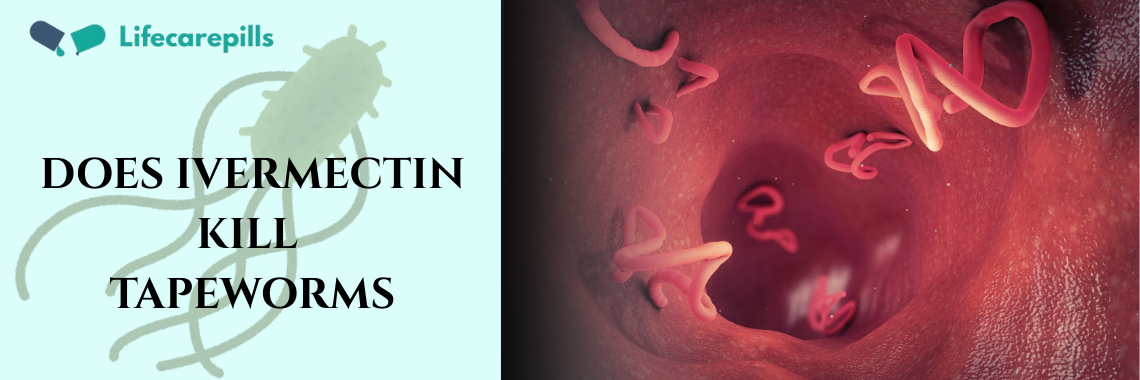
If you’re searching does ivermectin kill tapeworms , the medically accurate answer is no—it does not reliably treat tapeworms in the gut, and it is mainly used for other worms such as roundworms (nematodes). For intestinal tapeworm infections, US treatment guidelines recommend praziquantel as the preferred first-line medicine, with albendazole as another option in selected cases. This article is mainly targeted in the US, where readers often search by medicine name before urgent care, telehealth, or a primary doctor visit. CDC guidance clearly separates gut tapeworm treatment from other intestinal worms that ivermectin can treat, which is why choosing the right medicine matters.
A lot of confusion happens because people use the general term “worms in the gut.” But medically, not all intestinal worms respond to the same medicine.
The Direct Answer: Gut Tapeworms vs Other Worms
The short answer is simple:
Ivermectin Does Not Reliably Treat
- Beef tapeworm
- Pork tapeworm
- Fish tapeworm
- Dwarf tapeworm
Ivermectin Does Treat Well
- Strongyloides
- Some roundworms
- Certain soil-transmitted intestinal worms
- Some larval worm infections
So the keyword answer remains:
does ivermectin kill tapeworms in the gut? → usually no.
It is much better for other worms, especially roundworms living in or affecting the intestine.
Why It Does Not Work Well for Gut Tapeworms
The reason comes down to parasite biology.
Ivermectin works by targeting glutamate-gated chloride channels, which are highly active in:
- Roundworms
- Arthropods
- Mites
- Lice
This causes paralysis and death.
But gut tapeworms are flatworms (cestodes), and their nerve-muscle system responds differently. At safe human doses, ivermectin does not reliably detach or kill the adult tapeworm in the intestine.
That is why it treats other worms far better than intestinal tapeworms.
The Best Medicine for Gut Tapeworms in the US
This article is mainly targeted in the US, so the most relevant medical guidance is from CDC.
1) Praziquantel
The preferred first-line medicine for active intestinal taeniasis in the US.
It is often given as a single oral dose of 5–10 mg/kg, with very high cure rates.
2) Albendazole
Another option, especially when:
- Pork tapeworm is suspected
- Tissue spread risk exists
- Brain symptoms need evaluation
A common CDC-listed regimen is 400 mg daily for 3 days.
So for tapeworms in the gut, these are much better choices than ivermectin.
Other Gut Worms Ivermectin Treats Very Well
Even though it is not ideal for tapeworms, ivermectin remains excellent for several intestinal worms.
Strongyloides (One of the Most Important)
This is one of ivermectin’s strongest evidence-based uses.
Symptoms may include:
- Abdominal pain
- Diarrhea
- Bloating
- Rash
- Cough
- Recurring GI upset
CDC considers ivermectin a key treatment option for this intestinal roundworm.
Some Soil-Transmitted Intestinal Worms
Ivermectin may also be used in selected US protocols for:
- Ascariasis
- Some whipworm combinations
- Certain hookworm or mixed roundworm cases
Again, the important distinction is:
- Roundworms in the gut → ivermectin may help
- Tapeworms in the gut → praziquantel is better
Symptoms That Make People Ask This Question
Many people don’t know whether they have a tapeworm or another intestinal worm.
Common symptoms include:
- Stomach cramps
- Nausea
- Loose stools
- Bloating
- White stool segments
- Weight loss
- Itching
- Hunger pains
The biggest clue for gut tapeworms is usually:
White Rice-Like Segments in Stool
These are proglottids, or tapeworm segments.
This symptom strongly points toward tapeworm in the intestine, where ivermectin is usually not enough.
Why People Confuse Tapeworms With Other Gut Worms
This is one of the most common US search confusions.
People often search:
- “worms in stool”
- “best dewormer”
- “medicine for gut worms”
- “does ivermectin kill tapeworms”
But several intestinal parasites can cause similar symptoms.
Other Worms in the Gut
- Roundworms
- Hookworms
- Whipworms
- Strongyloides
Non-Worm Causes
- IBS
- Food poisoning
- Giardia
- Mucus strands
- Undigested food fibers
That’s why stool testing is more reliable than guessing based on symptoms.
Why This Article Is Mainly Targeted in the US
This guide is mainly targeted in the US, where medication-specific searches are extremely common.
Common US reasons include:
- Eating undercooked pork or beef
- Seeing white stool segments
- Telehealth searches for “deworming pills”
- Travel exposure
- Camping or soil contact
- Recent GI symptoms after raw fish
For US readers, the key takeaway is simple:
ivermectin treats other worms much better than tapeworms in the gut.
Risks of Using It for Gut Tapeworms
If someone uses ivermectin for an intestinal tapeworm, it may lead to:
- Persistent infection
- Continued egg shedding
- Ongoing stool segments
- Delayed praziquantel treatment
- Delayed diagnosis
- Missed pork tapeworm complications
This is especially important with Taenia solium, where complications can extend beyond the gut.
Follow-Up After Proper Gut Tapeworm Treatment
CDC recommends stool follow-up to make sure the tapeworm is fully gone.
Typical follow-up includes:
- Stool checks for several days after treatment
- Repeat stool testing at 1 month
- Repeat stool testing at 3 months
This helps confirm:
- Egg shedding has stopped
- The scolex (head) was removed
- Reinfection is not occurring
The Bottom Line
So, does ivermectin treat tapeworms in the gut or only other worms?
The evidence-based answer is:
- Not reliable for gut tapeworms
- Excellent for several other worms
- Especially strong for Strongyloides and some roundworms
- Gut tapeworms usually need praziquantel
- US care guidelines clearly separate these uses
So the answer to does ivermectin kill tapeworms remains no, while its true strength is in other intestinal worms and roundworm infections.
FAQs
1) Does ivermectin kill tapeworms in the gut?
No. It is not considered reliable for intestinal tapeworm infections.
2) What gut worms does ivermectin treat best?
It is especially effective for Strongyloides and certain roundworms.
3) What is the best US medicine for gut tapeworms?
Usually praziquantel, which CDC lists as the preferred treatment.
4) Why does it only treat other worms?
Because it targets nematode nerve channels, which tapeworms do not respond to the same way.
5) Is this article mainly targeted in the US?
Yes, this content is mainly targeted in the US, where medication-first parasite searches are very common.

 English
 Arabic
 French
 Spanish
 Portuguese
 Deutsch
 Turkish
 Dutch
Dutch
 Italiano
 Russian
 Romaian
 Portuguese (Brazil)