


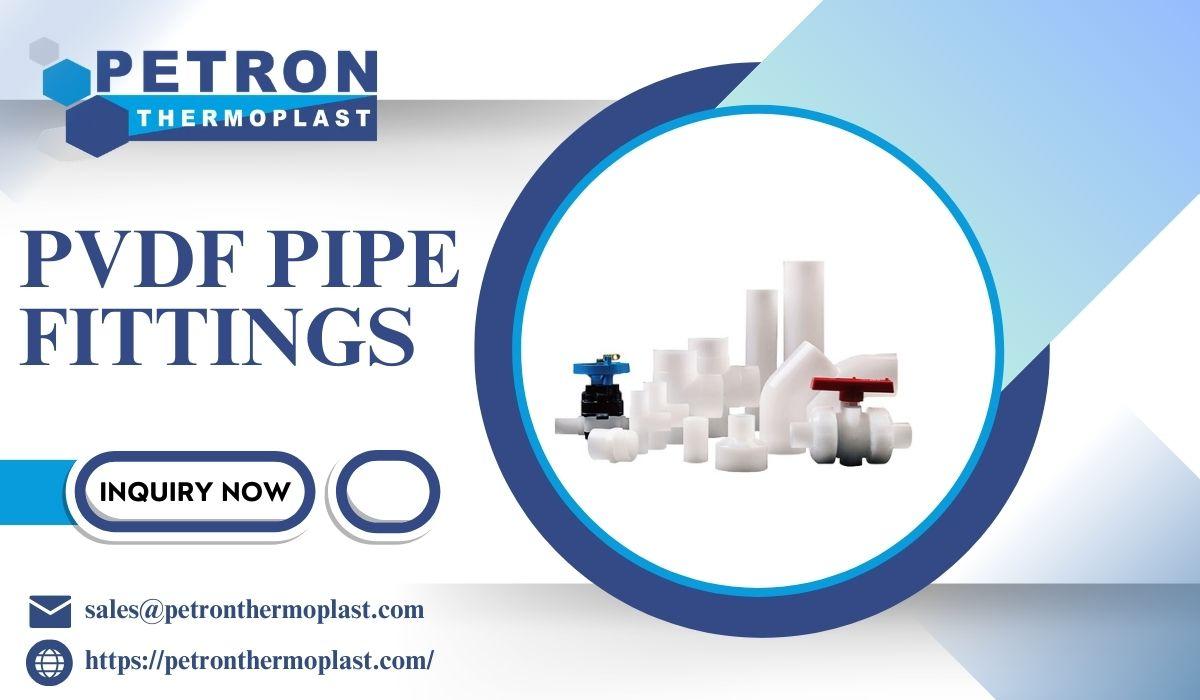
In today’s highly competitive industrial landscape, reliable piping systems are the backbone of efficient plant operations. From chemical processing and pharmaceuticals to semiconductor manufacturing and water treatment, industries require materials that can withstand aggressive environments without compromising performance. Among advanced thermoplastics, PVDF pipe fittings have emerged as the preferred choice for high-purity and corrosion-resistant applications.
With increasing globalization, overseas supply of PVDF (Polyvinylidene Fluoride) pipe fittings has become a strategic priority for industrial plants seeking quality, compliance, and cost efficiency. Leading manufacturers like Petron Thermoplast play a crucial role in delivering export-grade PVDF solutions to global markets. This article explores why PVDF fittings are in demand, how overseas supply works, and what industrial buyers should consider when sourcing internationally.
Understanding PVDF Pipe Fittings
PVDF is a high-performance fluoropolymer known for its exceptional resistance to chemicals, UV radiation, and high temperatures. PVDF pipe fittings are used to connect, control, and direct fluid flow in industrial piping systems.
Key Properties of PVDF
- Excellent resistance to acids, alkalis, solvents, and oxidizers
- High thermal stability (up to 140°C continuous service)
- Superior mechanical strength and toughness
- Low permeability and high purity
- Outstanding UV and weather resistance
These properties make PVDF fittings ideal for critical industrial applications where failure is not an option.
Growing Global Demand for PVDF Fittings
Industrial growth across Asia, the Middle East, Europe, and Africa has accelerated the demand for advanced piping materials. Traditional materials such as metal, PVC, or rubber-lined pipes often fail in corrosive or high-purity environments. As a result, PVDF has become the material of choice in sectors such as:
- Chemical processing plants
- Pharmaceutical manufacturing
- Semiconductor fabrication units
- Desalination and water treatment facilities
- Oil, gas, and specialty chemical plants
Overseas procurement allows industrial buyers to access high-quality PVDF fittings at competitive prices while meeting international standards.
Why Industrial Plants Prefer Overseas Supply?
1. Access to Specialized Manufacturers
Not every country has advanced PVDF processing capabilities. Overseas sourcing enables plants to work with manufacturers that specialize in fluoropolymer engineering, CNC machining, and precision molding.
2. Cost Optimization
Export-oriented manufacturers often benefit from economies of scale and optimized production systems. This allows international buyers to procure premium-quality fittings at lower overall costs.
3. Global Quality Standards
Reputed exporters follow international standards such as ISO, ASTM, DIN, and BS. This ensures consistency, safety, and compatibility across projects.
4. Custom Engineering Support
Overseas suppliers frequently offer customized solutions, including special dimensions, pressure ratings, and connection types tailored to plant requirements.
Types of PVDF Pipe Fittings Supplied Internationally
Industrial plants typically require a wide range of fittings to complete their piping networks. Common export-grade PVDF fittings include:
● Elbows and Bends
Used to change flow direction with minimal pressure loss.
● Tees and Crosses
Enable branch connections in complex pipeline layouts.
● Reducers
Allow smooth transition between different pipe diameters.
● Couplings and Unions
Support easy assembly, maintenance, and dismantling.
● Flanges and Adaptors
Ensure secure and leak-proof connections to equipment.
● Valves and Accessories
Complement fittings for flow regulation and isolation.
Each fitting is designed to maintain system integrity under high pressure and corrosive conditions.
Key Industries Using Imported PVDF Fittings
Chemical Processing
PVDF fittings are highly resistant to sulfuric acid, hydrochloric acid, chlorine compounds, and solvents. This makes them ideal for chemical reactors, storage transfer lines, and dosing systems.
Pharmaceutical & Biotechnology
High purity and non-contaminating characteristics make PVDF suitable for cleanroom piping, purified water systems, and sterile manufacturing processes.
Semiconductor & Electronics
Ultra-pure water and chemical delivery systems in semiconductor fabs rely on PVDF for contamination-free performance.
Water Treatment & Desalination
PVDF resists chlorine, ozone, and saline water, ensuring long service life in desalination and wastewater treatment plants.
Oil & Specialty Chemicals
PVDF fittings withstand aggressive hydrocarbons and specialty chemicals, improving plant safety and uptime.
Export Manufacturing & Quality Assurance Process
Reliable overseas supply depends on a strong quality control framework. Leading PVDF exporters follow a multi-stage inspection and testing process:
Raw Material Selection
Only virgin, certified PVDF resins are used to ensure mechanical and chemical performance.
Precision Manufacturing
Advanced injection molding and CNC machining ensure dimensional accuracy and smooth internal surfaces.
Testing & Inspection
- Hydrostatic pressure testing
- Dimensional verification
- Chemical resistance testing
- Visual and surface inspection
Documentation
Export shipments include material certificates, test reports, packing lists, and compliance documents.
This structured process ensures every fitting meets international buyer expectations.
Packaging and Logistics for Overseas Supply
Exporting PVDF pipe fittings requires careful handling to prevent damage during transit.
Export Packaging Standards
- Individual protective wrapping
- Shock-resistant cartons
- Wooden pallets or crates for bulk shipments
- Moisture-resistant packing materials
Logistics & Shipping
Manufacturers coordinate with freight forwarders to offer:
- Sea freight for bulk orders
- Air freight for urgent deliveries
- Door-to-door logistics support
- Customs clearance assistance
Efficient logistics minimize delays and ensure timely project execution.
Benefits of Partnering with a Reliable Export Supplier
Choosing the right overseas supplier delivers long-term advantages:
✔ Consistent Product Quality
Stable performance across multiple project phases.
✔ Technical Support
Assistance with design, installation, and troubleshooting.
✔ Scalability
Ability to handle small orders and large EPC projects.
✔ Long-Term Cost Savings
Reduced maintenance, downtime, and replacement costs.
✔ Strong After-Sales Service
Spare parts availability and warranty support.
A trusted supplier becomes a strategic partner rather than just a vendor.
Factors to Consider When Importing PVDF Fittings
Before finalizing an overseas supplier, industrial buyers should evaluate:
Manufacturing Experience
Look for companies with proven export track records.
Certifications
Ensure compliance with ISO and relevant international standards.
Customization Capability
Check if special sizes and configurations are supported.
Lead Time
Confirm realistic production and delivery schedules.
Communication & Support
Transparent communication is essential for smooth transactions.
Reference Projects
Past international projects indicate reliability.
These factors help reduce procurement risks.
Sustainability and Environmental Compliance
Modern industrial plants are increasingly focused on sustainability. PVDF fittings contribute to environmental goals by:
- Offering long service life, reducing waste
- Minimizing leakage and chemical loss
- Supporting recyclable and low-emission production processes
Export-oriented manufacturers also comply with international environmental regulations, making PVDF systems suitable for green-certified facilities.
Role of Indian Manufacturers in Global Supply
India has become a major hub for industrial plastic manufacturing due to skilled manpower, advanced machinery, and cost efficiency. Indian exporters supply PVDF fittings to the Middle East, Africa, Southeast Asia, and Europe.
Companies like Petron Thermoplast combine international standards with competitive pricing, making them preferred partners for overseas industrial projects.
Future Trends in PVDF Export Markets
The global PVDF fittings market is expected to grow steadily due to:
- Expansion of chemical and pharmaceutical industries
- Rising semiconductor investments
- Growth in desalination projects
- Increased focus on corrosion-resistant infrastructure
Smart manufacturing, digital quality monitoring, and customized engineering solutions will further strengthen overseas supply chains.
Conclusion
Overseas supply of PVDF pipe fittings plays a vital role in supporting modern industrial plants worldwide. With superior chemical resistance, high purity, and long-term reliability, PVDF fittings are indispensable for critical process applications.
By sourcing from experienced exporters, industrial buyers gain access to world-class products, technical expertise, and dependable logistics support. Whether for chemical plants, pharmaceutical units, or water treatment facilities, partnering with a trusted PVDF supplier ensures operational efficiency, safety, and long-term cost savings.

 Arabic
 French
 Spanish
 Portuguese
 Deutsch
 Turkish
 Dutch
Dutch
 Italiano
 Russian
 Romaian
 Portuguese (Brazil)
 Tiếng Việt