


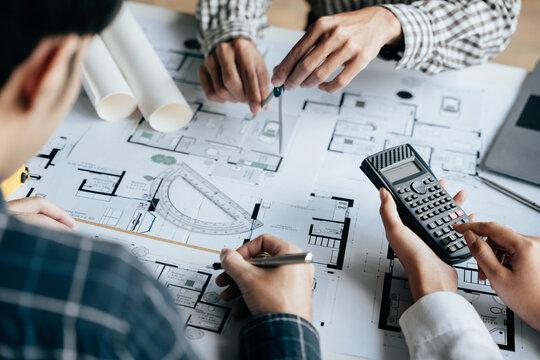
Every construction project needs a clear budget to succeed. Construction budget planning is the process of estimating how much things will cost, handling the money and keeping the construction project on track. When the construction budget is accurate, builders stay on schedule, avoid wasting money and finish the construction project on time.
To make things simpler and more reliable, a lot of builders now use budget estimating services. These services provide people with accurate cost estimates when they are first starting out on a project. They help contractors and builders understand how much money they will need before starting construction and reduce the risk of spending too much money.
The steps in the process of accurate budget planning are explained below.
Step 1: Understanding the Project Scope
The first thing to do when planning a budget is to understand the project scope. The project scope tells us what work needs to be done. This includes:
-
Size of the building
-
Type of materials
-
Design details
-
Project timeline
When project scope is clear, it is easier to estimate cost. If the project scope is not clear, the budget will probably not be accurate. You can hire concrete estimating services from the start. These services calculate how much concrete material, labour and equipment you need. They also calculate the total cost needed for your project. They also cover work like foundations, floors, walls and steel reinforcements so your budget is more clear and correct.
Step 2: Site Analysis
Every construction site is unique. Some sites are simple to work with while others can be really tough. Builders take a look at the construction site to check a few things, including:
-
Soil condition
-
Land shape
-
Accessibility
-
Weather conditions
For instance, if the soil condition is weak, the builders have to do extra work to make a strong foundation. This extra work increases the cost of construction. So doing a site analysis helps the builders plan a realistic budget.
Step 3: Material Cost
Materials are one of the biggest parts of any construction project. Builders need to figure out how much material is required and how much it will cost us. The materials used include the following:
-
Cement
-
Steel
-
Bricks
-
Wood
-
Tiles
The prices of these materials can go up or down over time. That is why experts check the current market rates before they make a budget.
Step 4: Labour Cost Calculation
The labour cost is another major part of the budget. You need workers to do jobs like construction, fixing pipes or doing electrical work. Labour costs depend on the following:
-
Number of workers
-
Skill level
-
Working hours
-
Project duration
Workers who are really good at their job may charge more, but they usually finish the work quickly with good quality. So picking the right labour is important for the cost and the quality.
Step 5: Equipment and Machinery Costs
Construction projects sometimes need to have the machines and tools. These include cranes, mixers, trucks and other equipment. Builders decide whether to:
-
Buy equipment
-
Rent equipment
Renting equipment is usually cheaper when you only need it for some time. If you are going to be using the equipment and machinery for a long time, it might be better to buy it.
Step 6: Adding Overhead Costs
Overhead costs are the extra money that is required to keep the project running. These costs are not directly linked to the construction work but are still very important to consider.
Examples include:
-
Office expenses
-
Site security
-
Utilities like water and electricity
-
Permits and approvals
Step 7: Contingency Costs
No construction project is perfect. There is always risk of unexpected problems happening at any time. These problems include:
-
Material price increase
-
Weather delays
-
Design changes
To handle these construction problems, builders add contingency costs of 5% to 10% of the total budget. The contingency costs act as a safety buffer that helps manage surprises during construction projects.
Step 8: Making a Detailed Cost Breakdown
After collecting all the cost information, builders make a detailed cost breakdown. It include:
-
Material costs
-
Labour costs
-
Equipment costs
-
Overhead costs
-
Contingency costs
This step is important because it helps everyone understand where the money will be spent. It also makes it easier to track everything during the project.
Step 9: Reviewing and Finalizing the Budget
The budget needs to be reviewed carefully before starting the project. At this stage, many builders choose to work with an estimating company to make the process more accurate and free of stress. They check every detail, find costs that are missing and help solve problems like underpricing or gaps in the budget.
They may also:
-
Compare the past projects
-
Adjust the numbers to account for inflation
-
Review suppliers' quotes
After they review the budget, the budget plan is approved.
Step 10: Monitoring During Construction
The budget planning does not stop after approval. It keeps going while the construction work is happening.
Builders track:
-
Daily expenses
-
How they use material
-
How many hours the labour people work
Tracking helps in a way that if the costs get too high and go above the plan, the builders take action right away to control the spending on the construction project.
Common Mistakes to Avoid
A lot of projects get into trouble because of poor budget planning. Here are some common mistakes to avoid during budget planning:
-
Not defining the project scope clearly
-
Rushing into budget planning for the project
-
Not thinking about the hidden costs of the project
-
Underestimating labour expenses
-
Not adding some contingency funds
-
Not keeping track of how much money's being spent on the project
If you avoid these mistakes, your budget planning will be more accurate and successful.
Final Thoughts
To get construction budgeting right, you need to follow a simple process with an easy step-by-step approach. It requires careful thinking and working in detail. First, you need to understand what the project involves. Then you have to keep monitoring your spending till the project ends. Every step of this process is important. Builders who follow this process are better at controlling costs. If you want your construction project to be a success, you have to start with an accurate budget plan.

 English
 Arabic
 French
 Spanish
 Portuguese
 Deutsch
 Turkish
 Dutch
Dutch
 Italiano
 Russian
 Romaian
 Portuguese (Brazil)