


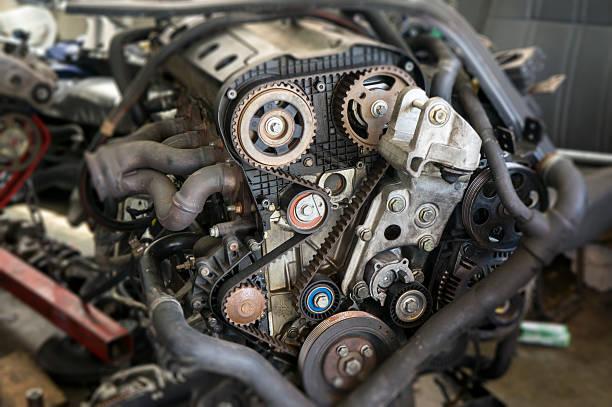
Brazil automotive actuators market size, CAGR, and forecast (core stats)
IMARC values the Brazil automotive actuators industry at USD 543.75 million in 2025 and projects it will reach USD 843.53 million by 2034, expanding at a 5.00% CAGR during 2026–2034.
Report scope:
- Base year: 2025
- Historical period: 2020–2025
- Forecast period: 2026–2034
- Units: Million USD
What’s driving demand in Brazil
- Accelerating vehicle production in Brazil, lifting actuator installation volumes across applications (braking, seating, transmission, comfort).
- Rising adoption of advanced driver assistance systems (ADAS), increasing demand for reliable, responsive actuation as vehicles add electronically controlled functions.
- Rapid transformation toward electric mobility, which typically increases reliance on electrical actuators (and actuator control integration) across vehicle subsystems.
- User demand for comfort features and fuel-efficiency pressure, both of which push automakers toward more electronically controlled mechanisms.
- Government incentives for green mobility and foreign investment in local manufacturing, which IMARC frames as opportunity catalysts for actuator makers across the value chain.
IMARC also cites market activity examples and production context to support the outlook: it notes Brazil produced 2.55 million vehicles in 2024 and sold 2.64 million units, reinforcing the “volume + feature content” growth logic.
Market segmentation (the structure you’ll use for strategy and positioning)
IMARC segments the Brazil automotive actuators market by:
- Actuator Type
- Vehicle Type
- Application Type
- Region
Below is the segmentation exactly as presented, with the leading segment and share where IMARC provides it.
1) Segmentation by actuator type (with leading share)
Actuator types covered (IMARC):
- Electrical actuators
- Hydraulic actuators
- Pneumatic actuators
Leading segment (2025):
- Electrical actuators lead with 52% market share in 2025.
Why electrical dominates (IMARC’s reasoning, simplified): IMARC attributes electrical leadership to advantages like energy efficiency, lower heat/noise, flexible installation, and compatibility with EV/hybrid platforms—all aligned with where vehicle design is going.
2) Segmentation by vehicle type (with leading share)
Vehicle types covered:
- Passenger car
- Commercial vehicle
Leading segment (2025):
- Passenger cars lead with a 69% share in 2025.
IMARC links passenger-car leadership to higher production volumes and sustained demand for feature-rich vehicles (comfort + safety), which increases actuator usage per unit.
3) Segmentation by application type (with leading share)
Application types covered (IMARC):
- Throttle actuator
- Seat adjustment actuator
- Brake actuator
- Closure actuator
- Others
Leading segment (2025):
- Brake actuator is the largest application segment with a 30% share in 2025.
IMARC attributes brake actuator leadership to its central role in safety, plus integration into ABS, electronic stability systems, and ADAS-linked braking functions, along with growth in electronic parking brake adoption.
4) Segmentation by region (Brazil)
IMARC breaks the market into:
- Southeast
- South
- Northeast
- North
- Central-West
Key trends shaping the industry
IMARC highlights a few trends that signal how actuator demand will evolve—not just that it will rise:
Growth in vehicle production volumes
IMARC explicitly states that increasing domestic production expands demand across actuator use cases (braking, seating, transmission, comfort). It cites 2024 production at 2.55 million vehicles and sales at 2.64 million units as evidence of strong activity.
Electrification accelerates electrical actuator adoption
IMARC emphasizes that EV/hybrid platforms rely heavily on electrical actuators for electronically controlled systems (braking, power management, thermal regulation, interior functions).
Commercial vehicle momentum adds actuator demand for control + reliability
IMARC links logistics and infrastructure activity with demand for commercial vehicles, which increasingly integrate actuators for braking, transmission, and safety functions.
Challenges and risk factors (important for realistic forecasting)
A credible Brazil automotive actuators industry view includes friction points. IMARC flags challenges such as:
- High development and manufacturing costs
- Supply chain vulnerabilities and import dependencies
- Exchange-rate volatility and tariff changes impacting costs
- Limited local manufacturing for specialized components
- Competitive pressure from global suppliers
Download a sample copy of the report
Conclusion: what to watch through 2034
The Brazil automotive actuators market is forecast to grow from USD 543.75 million (2025) to USD 843.53 million (2034) at a 5.00% CAGR (2026–2034). The biggest strategic signals from IMARC’s segmentation are clear: electrical actuators lead, passenger cars dominate, and brake actuators are the single largest application segment, which together point to a market increasingly anchored in electronics-driven safety and comfort.

 English
 Arabic
 Spanish
 Portuguese
 Deutsch
 Turkish
 Dutch
Dutch
 Italiano
 Russian
 Romaian
 Portuguese (Brazil)
 Tiếng Việt