


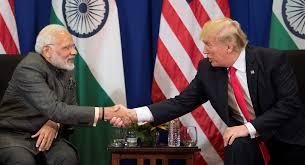
The relationship between the United States and India has evolved dramatically over the past few decades. Once marked by cautious diplomacy and differing geopolitical priorities, US India relations have transformed into a dynamic strategic partnership. Today, the two nations collaborate across multiple domains including defense, technology, trade, climate action, and global security. As the world’s largest and oldest democracies, India and the United States share fundamental values that strengthen their bilateral engagement.
This growing partnership is increasingly important in shaping regional stability, economic development, and global governance. In this blog, we explore the history, key areas of cooperation, challenges, and the future prospects of US India relations.
Historical Background of US India relations
The diplomatic relationship between the United States and India officially began in 1947 after India gained independence. In the early decades, the relationship remained somewhat distant. India pursued a policy of non-alignment during the Cold War, while the United States often aligned with Pakistan in South Asia due to strategic considerations.
Despite these differences, the relationship slowly evolved through economic assistance, educational exchanges, and diplomatic dialogue. A significant turning point came in the early 2000s when both nations recognized the importance of working together in a rapidly changing global order.
One of the most important milestones in US India relations was the 2008 India–US Civil Nuclear Agreement, which allowed India access to civilian nuclear technology despite not being a signatory to the Nuclear Non-Proliferation Treaty. This agreement symbolized a major shift toward deeper strategic cooperation.
Strategic and Defense Cooperation
Defense cooperation has become a cornerstone of US India relations. Over the past decade, the two countries have signed several agreements to enhance military interoperability, intelligence sharing, and defense trade.
The United States has emerged as one of India’s largest defense partners. India purchases advanced defense equipment from the US, including aircraft, helicopters, and surveillance systems. Joint military exercises such as Malabar, conducted with partners like Japan and Australia, have strengthened operational coordination in the Indo-Pacific region.
Additionally, the signing of foundational defense agreements such as LEMOA (Logistics Exchange Memorandum of Agreement), COMCASA, and BECA has significantly deepened defense collaboration. These agreements enable secure communications, logistics support, and geospatial intelligence sharing.
Such cooperation reflects a shared commitment to maintaining a free, open, and secure Indo-Pacific region.
Economic and Trade Partnership
Trade and economic cooperation are another critical pillar of US India relations. The United States is one of India’s largest trading partners, with bilateral trade covering goods, services, and technology.
Key sectors driving this economic relationship include:
- Information technology and digital services
- Pharmaceuticals and healthcare
- Energy and renewable resources
- Manufacturing and supply chains
Indian companies have invested billions of dollars in the United States, creating jobs and strengthening economic ties. Similarly, American companies play a major role in India’s technology ecosystem, especially in sectors like cloud computing, artificial intelligence, and digital infrastructure.
The growing digital economy and innovation partnership between the two nations is expected to further boost bilateral trade in the coming years.
Technology and Innovation Collaboration
Technology has become a central focus of modern US India relations. Both countries are collaborating in areas such as semiconductors, artificial intelligence, space exploration, and cybersecurity.
Initiatives like the US–India Initiative on Critical and Emerging Technology (iCET) aim to enhance cooperation in advanced technological sectors. This collaboration supports research partnerships, startup ecosystems, and technology transfer between the two nations.
In the space sector, organizations like NASA and ISRO have also expanded cooperation, working together on satellite missions, earth observation, and scientific research.
Such partnerships position both countries as leaders in technological innovation and digital transformation.
Cultural and People-to-People Connections
One of the strongest aspects of US India relations is the deep cultural and human connection between the two societies. The Indian diaspora in the United States, which numbers over four million people, plays a crucial role in strengthening bilateral ties.
Indian professionals contribute significantly to sectors such as technology, healthcare, academia, and entrepreneurship in the United States. Educational exchanges also remain strong, with thousands of Indian students studying in American universities each year.
These people-to-people ties create a strong foundation for continued cooperation and mutual understanding between the two nations.
Challenges in US India relations
Despite strong cooperation, certain challenges remain in US India relations. Trade disputes, regulatory differences, and varying approaches to international issues occasionally create friction.
For example, discussions around tariffs, market access, and intellectual property rights sometimes require careful negotiation. Additionally, geopolitical developments in regions like South Asia and the Indo-Pacific can influence diplomatic strategies.
However, both countries have demonstrated a consistent commitment to dialogue and partnership, ensuring that such challenges do not derail the overall relationship.
The Future of US India relations
Looking ahead, the future of US India relations appears highly promising. As global dynamics shift, both countries recognize the importance of closer collaboration in addressing key global challenges such as climate change, supply chain security, emerging technologies, and regional stability.
Initiatives in clean energy, digital infrastructure, defense innovation, and global health are expected to drive the next phase of cooperation. With shared democratic values and complementary economic strengths, the United States and India are well positioned to build one of the most influential strategic partnerships of the 21st century.
Conclusion
In recent decades, US India relations have transformed into a multifaceted partnership encompassing defense, trade, technology, and cultural exchange. While challenges remain, the shared commitment to democracy, innovation, and global stability continues to strengthen this important bilateral relationship.
As both nations work together to address emerging global challenges, their partnership will play a vital role in shaping the future of international politics, economic development, and technological progress.

 English
 Arabic
 French
 Spanish
 Portuguese
 Deutsch
 Turkish
 Italiano
 Russian
 Romaian
 Portuguese (Brazil)
 Tiếng Việt