


Pest infestations cost North American property owners over $6.5 billion annually in damages and treatments, according to recent industry data. Whether you're dealing with a minor ant problem or a full-scale rodent invasion, understanding when and why to call professional pest control can save you thousands of dollars and protect your family's health.
In this comprehensive guide, we'll explore everything you need to know about residential and commercial pest control services, helping you make informed decisions about protecting your property.
Why DIY Pest Control Often Fails
78% of homeowners who attempt DIY pest control methods report the problem returning within 30 days, according to the National Pest Management Association's 2024 survey.
Over-the-counter solutions might seem cost-effective, but they rarely address the root cause. Here's why professional intervention matters:
-
Expertise in pest behavior: Professionals understand breeding patterns, nesting habits, and seasonal activity cycles
-
Access to commercial-grade treatments: Licensed technicians use EPA-approved products not available to consumers
-
Comprehensive inspections: Identifying entry points and conducive conditions prevents future invasions
-
Long-term solutions: Professional treatments target entire colonies, not just visible pests
A Toronto homeowner recently shared their experience: after spending $400 on DIY products over three months, they finally hired professionals who eliminated their bed bug problem in two treatments for $600—saving both money and months of frustration.
Common Household Pests: Identifying the Enemy
Rodents: More Than Just a Nuisance
Mice and rats aren't just unsettling houseguests—they're serious health hazards. A single mouse produces 50-75 droppings daily, potentially spreading diseases like Hantavirus and Salmonella throughout your home.
Warning signs include:
-
Gnaw marks on furniture, wires, or food packaging
-
Droppings in cabinets, drawers, or along baseboards
-
Scratching sounds in walls or ceilings at night
-
Greasy rub marks along walls where rodents travel
Professional rodent control involves exclusion work (sealing entry points), strategic trap placement, and ongoing monitoring—something DIY methods rarely accomplish effectively.
Bed Bugs: The Resilient Parasites
Bed bug cases have increased by 300% over the past decade, with hotels, apartments, and single-family homes all vulnerable to infestation.
These parasites can survive up to one year without feeding and hide in the tiniest crevices. Professional heat treatments reaching 120-140°F are currently the most effective elimination method, with 97% success rates when properly applied.
Termites: The Silent Destroyers
Termites cause an estimated $5 billion in property damage annually in the United States and Canada. Most homeowner's insurance policies don't cover termite damage, making prevention crucial.
Annual inspections cost $75-150 but can save you from catastrophic structural repairs averaging $3,000-8,000 per incident.
Ants and Cockroaches: Persistent Invaders
While ants seem harmless, carpenter ants cause significant wood damage. Cockroaches, meanwhile, trigger asthma and allergies while spreading 33 different types of bacteria.
Professional treatments reduce cockroach populations by 95% within the first week, compared to 40-50% with consumer products, according to Purdue University's entomology department research.
Residential Pest Control: Protecting Your Family's Health
Effective residential pest control follows a systematic approach:
Step 1: Comprehensive Property Inspection
Licensed technicians examine your entire property, including:
-
Exterior perimeter and foundation
-
Attic and crawl spaces
-
Basement and utility areas
-
Kitchen and bathroom moisture sources
-
Garage and storage areas
This thorough assessment identifies current infestations and potential vulnerabilities.
Step 2: Customized Treatment Plans
Modern Integrated Pest Management (IPM) prioritizes safety while maximizing effectiveness. Treatments might include:
-
Exterior barrier applications: Creating a protective perimeter around your home
-
Targeted interior treatments: Addressing active infestations in specific areas
-
Exclusion work: Sealing entry points to prevent future invasions
-
Habitat modification: Eliminating moisture problems and food sources
Professional-grade products remain effective 3-6 months longer than retail alternatives, reducing the frequency and cost of treatments.
Step 3: Ongoing Monitoring and Prevention
Quarterly pest control services reduce the likelihood of major infestations by 89%, according to a 2024 industry study.
Regular visits allow technicians to catch new problems early, maintain protective barriers, and adjust strategies based on seasonal pest activity.
Commercial Pest Control: Protecting Your Business Reputation
For businesses, pest problems can be devastating. One pest sighting can result in:
-
Failed health inspections costing $1,000-10,000 in fines
-
Temporary closure orders affecting daily revenue
-
Permanent reputation damage in the age of online reviews
-
Legal liability from customer complaints
Industry-Specific Solutions
Restaurants and Food Service: Must maintain spotless conditions to pass health inspections. Professional programs include weekly inspections, immediate response protocols, and comprehensive documentation.
Healthcare Facilities: Require non-toxic solutions safe for vulnerable patients while meeting strict regulatory standards.
Hotels and Hospitality: Need discreet, effective treatments that don't disrupt guest experiences. Bed bug prevention programs reduce incident rates by 76% in hotels with regular monitoring.
Warehouses and Manufacturing: Face unique challenges with stored product pests and larger spaces requiring specialized equipment and techniques.
Compliance and Documentation
Commercial pest control companies provide detailed service reports essential for:
-
Health department inspections
-
Third-party audits
-
Insurance requirements
-
Corporate compliance standards
Businesses with documented pest management programs are 94% more likely to pass regulatory inspections on the first attempt.
Wildlife Control: Humane Removal Solutions
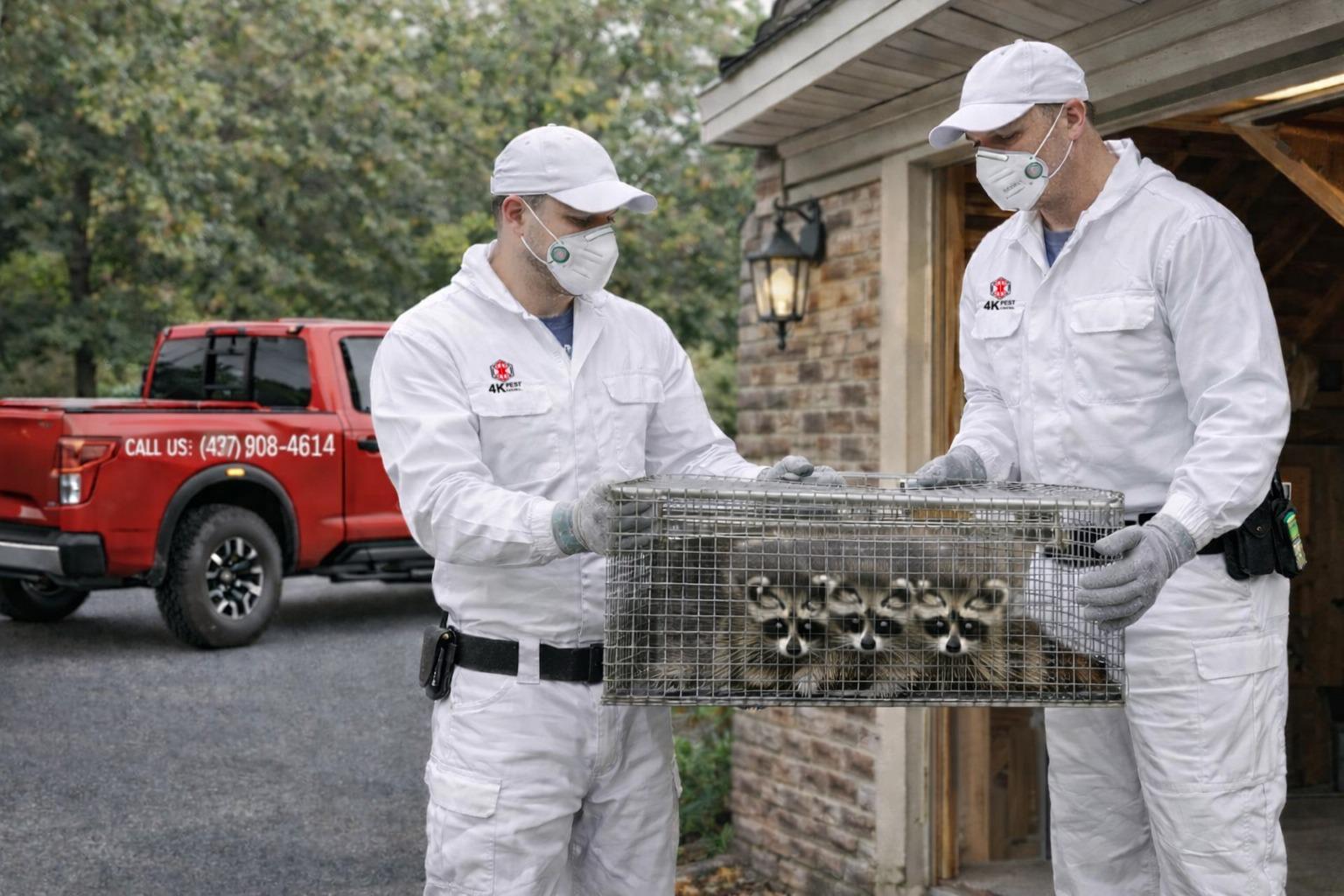
Wildlife intrusions require specialized expertise. Raccoons, squirrels, skunks, and bats pose unique challenges requiring humane removal methods compliant with local wildlife protection laws.
Professional wildlife control includes:
-
Species identification and behavioral assessment
-
Humane exclusion techniques allowing animals to exit but not re-enter
-
Damage repair and prevention to seal future access points
-
Cleanup and sanitization removing contaminated insulation and waste
A Hamilton family recently dealt with raccoons in their attic. Professional removal cost $800 but prevented $3,500 in insulation and structural damage the raccoons would have caused over winter.
https://4kpestcontrol.ca/residential-pest-control-service/
Seasonal Pest Prevention: Year-Round Strategy
Understanding seasonal patterns helps you stay ahead of infestations:
Spring (March-May): Ants establish new colonies, termites swarm, rodents become more active. Schedule spring inspections to catch problems early.
Summer (June-August): Peak season for wasps, mosquitoes, and flies. Heat drives pests indoors seeking water and air conditioning.
Fall (September-November): Rodents, spiders, and stink bugs seek indoor shelter. Fall exclusion work prevents 68% of winter rodent problems.
Winter (December-February): Indoor pests like cockroaches and rodents remain active. Heating systems create ideal conditions for certain species.
How to Choose the Right Pest Control Company
Look for these essential qualifications:
✓ Proper licensing and insurance (verify with your state/provincial regulatory board) ✓ Experienced, certified technicians with ongoing training ✓ Positive customer reviews on Google, Yelp, and BBB ✓ Comprehensive service guarantees offering free re-treatments if needed ✓ Transparent pricing with written estimates and no hidden fees ✓ Eco-friendly options using reduced-risk pesticides when appropriate
Red flags to avoid:
-
Pressure tactics or scare strategies
-
Refusal to provide written estimates
-
Unlicensed or uninsured companies
-
Guarantees that sound too good to be true
Take Action Before It's Too Late
Don't wait until minor pest sightings become major infestations. Early intervention costs 70% less than treating established colonies, according to pest management industry data.
Whether you're a homeowner protecting your family or a business owner safeguarding your reputation, professional pest control is an investment in health, safety, and property value.
Contact a licensed pest control professional today to schedule your comprehensive property inspection and take the first step toward a pest-free environment.
Frequently Asked Questions (FAQ)
How much does professional pest control cost?
Residential pest control typically ranges from $100-300 for initial treatments, with quarterly maintenance plans averaging $50-150 per visit. Commercial services vary widely ($200-2,000+) based on facility size and industry requirements. Most companies offer free inspections and estimates.
How often should I schedule pest control services?
Quarterly treatments (every 3 months) provide optimal protection for most residential properties. High-risk areas or commercial facilities may benefit from monthly services. One-time treatments are available but less effective for long-term prevention.
Are pest control treatments safe for children and pets?
Modern pest control uses EPA-registered products proven safe when applied correctly. Professional technicians follow strict safety protocols, including proper application techniques and recommended re-entry times (typically 2-4 hours). Always inform your technician about children, pets, or sensitivities.
What should I do to prepare for pest control treatment?
Basic preparation includes:
-
Remove food items from treatment areas
-
Clear floors and surfaces for easy access
-
Cover fish tanks and pet habitats
-
Provide access to crawl spaces, attics, and basements
-
Inform your technician of specific pest sighting locations
Your pest control company will provide detailed preparation instructions specific to your treatment.
How long does it take to eliminate an infestation?
Timeline varies by pest type:
-
Ants: 2-3 weeks with follow-up treatments
-
Cockroaches: 2-4 weeks for significant reduction
-
Bed bugs: 2-3 treatments over 4-6 weeks
-
Rodents: 1-2 weeks for trapping, plus exclusion work
-
Termites: Immediate protection with ongoing monitoring
Severe infestations may require additional time and treatments.
Can I prevent pests without professional help?
Preventative measures you can take:
-
Seal cracks and gaps around doors, windows, and utilities
-
Eliminate standing water and fix moisture problems
-
Store food in airtight containers
-
Keep trash sealed and removed regularly
-
Maintain clean gutters and proper drainage
While these steps help, professional treatments provide superior protection against established infestations and prevent future problems more effectively than DIY methods alone.
What's the difference between pest control and pest management?
Pest control focuses on eliminating current infestations. Pest management (IPM) is a comprehensive approach combining prevention, monitoring, and targeted treatments to maintain long-term pest-free environments while minimizing pesticide use. Professional companies increasingly adopt IPM strategies for sustainable results.
Do pest control companies guarantee their work?
Reputable companies offer service guarantees, typically including free re-treatments if pests return within 30-90 days of service. Review guarantee terms carefully—some exclude certain pests or require compliance with maintenance recommendations. Warranty details vary by company and service type.

 English
 Arabic
 French
 Spanish
 Portuguese
 Deutsch
 Turkish
 Dutch
Dutch
 Italiano
 Romaian
 Portuguese (Brazil)
 Tiếng Việt