


Choosing the right type of workspace is a major decision for businesses, organizations, and individuals planning office infrastructure. Traditional brick offices have long been the default choice for permanent workspaces, but increasingly, porta cabins are gaining attention as a cost-effective and flexible alternative. In order to make an informed decision, it’s essential to compare these two options in terms of cost, construction time, durability, maintenance, and long-term value.
This article provides a comprehensive porta cabin vs brick office cost comparison to help you understand which option may be best suited to your specific needs and budget.
What Is a Porta Cabin?
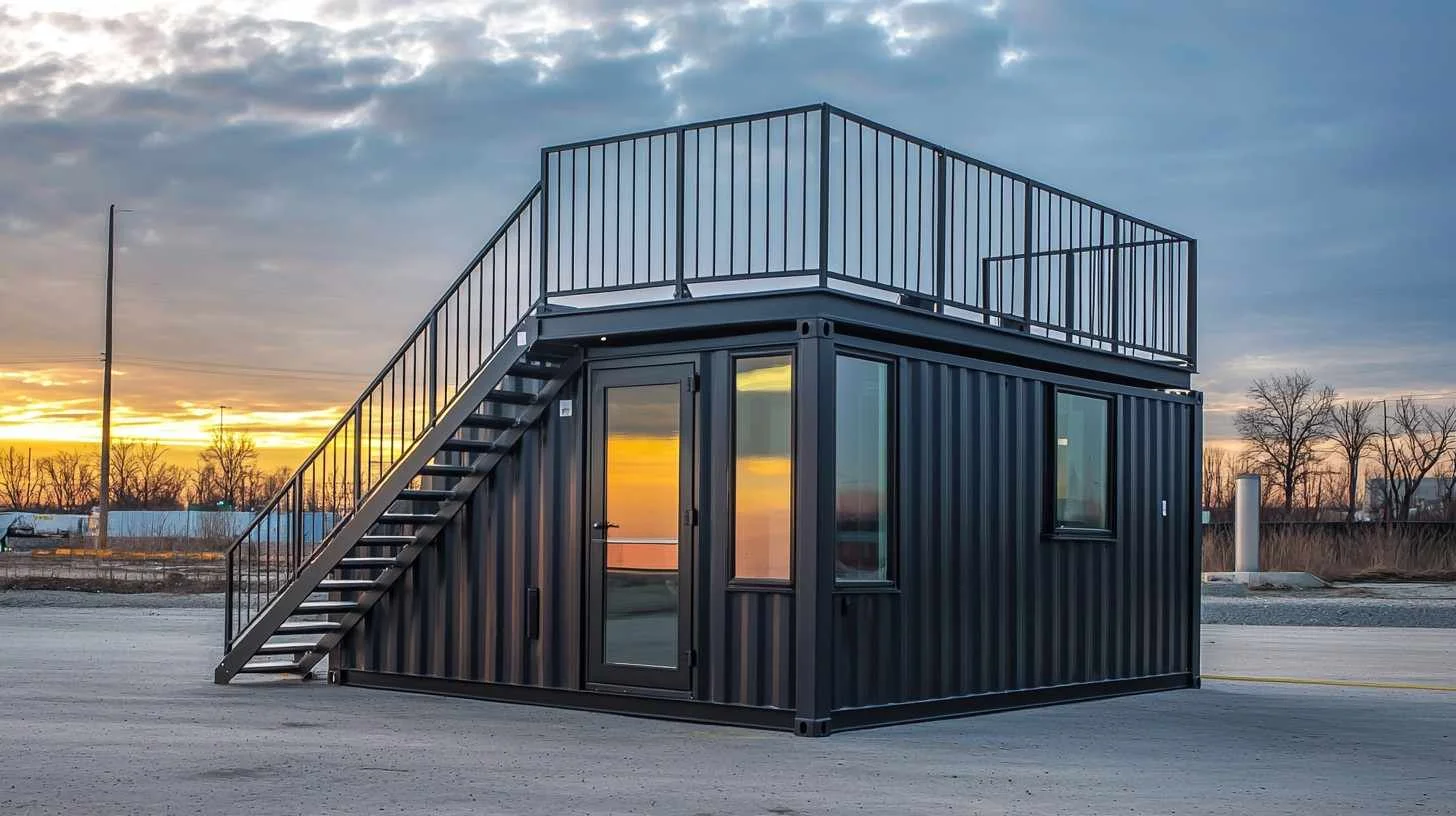
A porta cabin, also known as a portable office or modular cabin, is a prefabricated structure designed for temporary or semi-permanent use. These units are manufactured off-site and then transported to the desired location. Porta cabins can serve as offices, site camps, classrooms, or storage units. One of their most attractive features is the ability to set them up quickly with minimal groundwork.
What Is a Brick Office?
A brick office refers to a traditional office building constructed on-site using bricks, cement, steel, and other standard building materials. Brick offices are custom-built to specifications and designed to be permanent workspaces. They can include multiple rooms, reinforced structures, foundational depth, and custom architectural elements.
Key Cost Factors to Compare
When comparing porta cabins and brick offices, cost is not just about the upfront price. It includes multiple elements such as:
-
Initial construction cost
-
Time investment
-
Labor and material costs
-
Utility installation
-
Maintenance and long-term expenses
-
Flexibility and resale value
Below we break down these factors to determine the true cost difference between a porta cabin and a brick office.
Initial Construction Cost
Porta Cabin
The upfront cost of a porta cabin is significantly lower than that of a brick office. Since the units are prefabricated, material waste is minimized and labor costs are reduced through assembly line manufacturing. Costs vary depending on the size, materials used (steel, wood, sandwich panels), and additional features (air conditioning, partitions, carpeting).
On average, constructing a porta cabin can cost as low as one-third to one-half of a comparable brick office.
Brick Office
Brick office construction requires extensive planning, on-site labor, raw materials, and foundation work. Costs include excavation, bricklaying, structural reinforcement, plumbing, electrical wiring, roofing, finishing, and interior work. These elements significantly increase the total budget, making it more expensive than a porta cabin.
In general, a brick office can cost up to two to three times more than a portable cabin of similar functionality and size.
Time to Erect and Readiness
Porta Cabin
One of the biggest advantages of a porta cabin is speed. Since the units are prefabricated, they can be delivered and assembled on-site within a few days to a couple of weeks. No major groundwork or extended waiting period is required, making porta cabins ideal for urgent or short-term operational needs.
Brick Office
Brick office construction can take several months to complete, depending on design complexity, weather conditions, labor availability, and legal approvals. The time investment is significantly higher, which also affects the total cost indirectly through delays and extended project management expenses.
Labor and Material Costs
Porta Cabin
Because porta cabins are manufactured in controlled environments, labor costs are optimized and predictable. Materials used are usually lightweight steel frames, insulated panels, and standard fixtures, which help control costs without compromising basic functionality.
Brick Office
A brick office requires skilled masons, carpenters, electricians, plumbers, painters, and other workers. Labor costs are higher and often fluctuate based on region, demand, and project timeline. Material costs for bricks, cement, steel, and finishing materials also tend to be higher than prefab panels used in porta cabins.
Utility Installation and Infrastructure
Porta Cabin
Utility connections such as electricity, water, and networking are usually simpler for porta cabins. These units can often plug into existing utility lines, and because they are smaller, the cost of wiring, plumbing, and HVAC installation is lower.
Brick Office
Installing utilities in a brick office is more complex and costly. Plumbing, wiring, air conditioning ducts, and networking systems require planning, materials, and labor, which increases project costs. Additionally, permits and safety approvals may contribute to the process.
Maintenance and Long-Term Expenses
Porta Cabin
Porta cabins typically need less maintenance in the short term but may incur costs if they are used for extended periods. Because they are not designed for permanent use, issues such as insulation wear, panel damage, and roofing repairs may arise over time.
However, maintenance is generally easier and cheaper compared to brick offices.
Brick Office
Brick offices require periodic maintenance such as plastering, repainting, roof repairs, and structural checks. While these costs add up over years, brick structures are more resilient and easier to upgrade. Longevity often offsets maintenance expenses through higher long-term usage value.
Flexibility and Resale Value
| Feature | Porta Cabin | Brick Office |
| Upfront Cost | Lower | Higher |
| Construction Time | Fast | Slow |
| Maintenance | Moderate | Variable |
| Longevity | Moderate | High |
| Resale Value | Lower | Higher |
| Adaptability | High | Low |
| Portability | Easy | Not Applicable |
Porta Cabin
Porta cabins are highly flexible. They can be relocated, expanded, or repurposed with relative ease. However, their resale value is generally lower because they are seen as temporary solutions.
Brick Office
Brick offices are permanent and less adaptable but usually have higher resale value. Investors and buyers often prefer traditional structures for long-term business operations and asset appreciation.
Real-World Cost Scenarios
To illustrate cost differences, consider the following scenarios:
Small Office Setup (20–40 sq. m)
-
Porta Cabin: Quick installation in 1–2 weeks, minimal groundwork, basic utilities installed — significantly lower cost overall.
-
Brick Office: 2–4 months of construction, permits and approvals, higher labor and material cost — significantly higher total budget.
Medium Office Setup (100–200 sq. m)
-
Porta Cabin: Modular cabins can be joined; costs scale predictably with size.
-
Brick Office: Costs multiply due to structural complexity, interior finishes, and higher labor hours.
Long-Term Headquarters
-
Porta Cabin: Less ideal for long-term headquarters due to lower durability and resale value.
-
Brick Office: Better suited for long-term business infrastructure with stronger asset value.
Summary of Porta Cabin vs Brick Office Cost Comparison
The comparison between a porta cabin and a brick office boils down to immediate budget constraints, long-term goals, and intended use:
-
Porta cabins are ideal for short-term or budget-conscious needs with fast deployment.
-
Brick offices are a better long-term investment with higher durability and resale value, although more expensive upfront and time-intensive.
Your choice should align with your financial capabilities, project timelines, and future plans.
FAQs — Porta Cabin vs Brick Office Cost Comparison
Q1: Can a porta cabin be used as a permanent office?
A: While porta cabins can function as long-term spaces, they are generally less durable than brick offices and may require more maintenance over many years.
Q2: Why are brick offices more expensive?
A: Brick offices involve complex on-site construction, skilled labor, extensive materials, and longer timelines, all of which increase cost.
Q3: Do porta cabins require permits?
A: Requirements vary by location, but porta cabins often need fewer permits compared to permanent brick structures.
Q4: Is insulation a concern for porta cabins?
A: Basic insulation is provided in many porta cabin designs, but high-end insulation options may raise costs.
Q5: Can porta cabins be expanded later?
A: Yes, they are modular and can be joined or expanded more easily than brick structures.
Conclusion
Deciding between a porta cabin and a brick office depends on your priorities. If cost, speed, and flexibility are key, a porta cabin might be the right choice. If long-term durability, investment value, and traditional workspace needs matter more, a brick office could be worth the higher cost. This porta cabin vs brick office cost comparison highlights practical differences to help you choose the most suitable option for your unique situation.

 English
 Arabic
 French
 Spanish
 Portuguese
 Deutsch
 Turkish
 Dutch
Dutch
 Russian
 Romaian
 Portuguese (Brazil)
 Tiếng Việt